Dining Furniture as Brand Theater: Telling Your Hotel’s Story Through Every Chair and Table

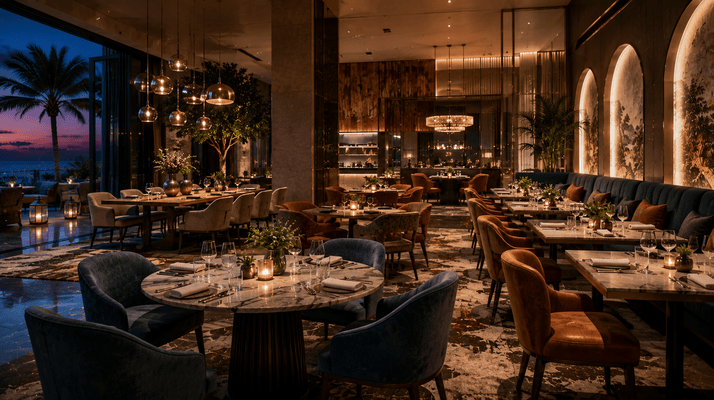
Every boutique property, luxury resort, and urban retreat operates as a living theater. From the moment a guest crosses the lobby threshold, they are sizing up your narrative. While marketing materials, lighting, and background playlists set the mood, the physical elements of your food and beverage spaces deliver the climax. The culinary arena is where travelers spend hours sitting, conversing, and absorbing their surroundings.

This brings us to a silent yet powerful storyteller: your choice of Hotel Dining Furniture. Far from being mere functional props for plates and glassware, every chosen silhouette is a direct translation of your ethos. Understanding how hotel dining furniture reflects brand identity allows hoteliers to turn ordinary breakfast rooms and fine dining spaces into unforgettable, immersive brand touchpoints.

The Subconscious Language of Hospitality Design

Guests read a room long before they read the menu. When someone sits down at a custom hotel dining table, their tactile interaction with the surface initiates an unspoken dialogue about your standards. A cold, synthetic laminate whispers of mass-produced convenience and rushed turnover. Conversely, a heavy, wire-brushed solid oak surface or a cold, meticulously honed piece of local marble communicates permanence, heritage, and uncompromising luxury.

The ergonomics of your seating arrangements write the script for the guest experience. Deeply cushioned, high-backed hotel dining chairs upholstered in rich mohair or soft top-grain leather signal an invitation to linger. They tell the guest that your property values slow, intentional dining, expensive wine pairings, and deep conversation.

On the opposite end of the spectrum, minimalist, geometric wooden stools or sleek molded frames suggest a high-energy, fast-casual environment perfect for digital nomads and quick espresso stops.

Crafting the Perfect Material Narrative

When sourcing Hotel Dining Furniture, treating the selection process as a curation of characters is essential. The materials you select must align perfectly with the overarching geographical and cultural story of the property.

Aesthetic Profile Table Selection Chair Choice Brand Message
Heritage & Historic Reclaimed local walnut with intricate marquetry inlaid details Sturdy, carved timber frames with traditional brass nailhead trim “We respect the rich history, craftsmanship, and soul of this region.”
Eco-Luxury & Wellness Softly rounded matte ash or sustainably sourced bamboo Woven organic hemp cords or biodegradable vegan leather seats “Your comfort coexists harmoniously with our deep commitment to nature.”
Avant-Garde & High-Fashion Architectural cast concrete or tinted, ultra-thick tempered glass Low-slung structural steel silhouettes in bold, custom primary hues “We are forward-thinking, culturally daring, and ahead of the trends.”

Seamless Integration of Aesthetics and Commercial Durability

The ultimate challenge in hospitality brand theater is maintaining the illusion of effortless beauty under intense commercial pressure. Beautiful residential furniture will quickly buckle under the constant operational strain of a bustling resort restaurant.

True luxury hospitality tables are engineered with hidden steel reinforcing bars beneath the timber to prevent warping from hot plates and spills. High-end seating features commercial-grade double-dowelled joints and high-resiliency foam wrappers that retain their crisp shape after thousands of sittings.

Furthermore, advanced performance textiles mean that a delicate cream bouclé or a pale sand linen can be safely specified for a busy cocktail lounge. These textiles are treated at the molecular level to repel red wine, coffee, and oils without losing their incredibly soft feel. This ensures that the physical manifestation of your brand never looks worn, stained, or tired to incoming guests.

Designing for the Digital Era

In today’s visually driven landscape, your restaurant layout serves as an organic marketing engine. When your tables possess striking grain patterns, unique edge details, or inset metallic branding badges, they naturally become the background for guest photography. Every social media post showcasing a beautifully plated dish over your distinct tabletop texture becomes a subtle, authentic endorsement of your property’s curated lifestyle.

If your dining furniture could speak, what would it say about your hotel?

Does it tell a story of refined elegance and timeless heritage, or does it whisper of overlooked details and mass production? By viewing your tables and seating through the lens of brand theater, you can ensure that every meal served at your property acts as a compelling chapter in your hotel’s ongoing story.
Climate-Resilient Luxury: Outdoor Furniture That Adapts to Extreme Weather in 2026

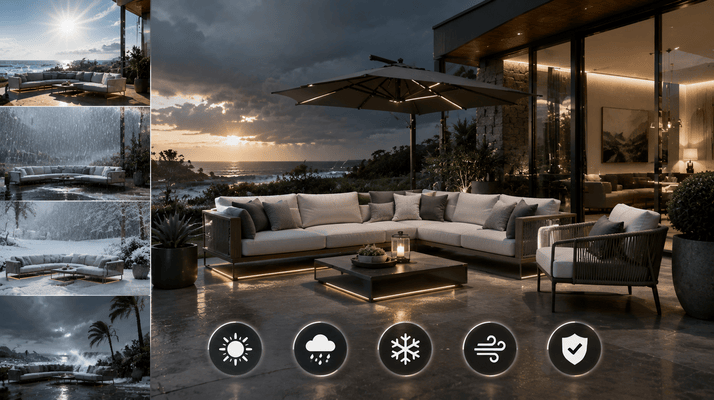
The definition of luxury living has fundamentally shifted. For years, designing an elite terrace or resort poolside was strictly about aesthetics—bringing the plush, sophisticated comfort of the indoor living room out into the open air. However, as global weather patterns present more frequent heat waves, unpredictable torrential downpours, and intense UV exposure, visual appeal is no longer enough.

In 2026, true luxury is defined by resilience. Today’s high-end consumers and elite commercial properties demand pieces that preserve their flawless look while braving environmental extremes. To understand how the industry is meeting this demand, we interviewed leading hospitality designers to uncover how the latest innovations in weatherproof outdoor furniture are redefining open-air spaces.


The New Engineering of All-Weather Elegance

“We are no longer just designing furniture; we are engineering micro-architectures that interact with changing microclimates,” explains architectural designer Elena Rossi. Rossi notes that high-end clients refuse to compromise on tactile comfort, yet they expect their investments to survive brutal summers and heavy monsoons.

The solution lies in advanced material science. High-gloss finishes and delicate natural wickers have been replaced by ultra-durable alternatives.


Sourcing Materials Built for Extremes

  • Marine-Grade Metals: Powder-coated, marine-grade aluminum and sandblasted stainless steel form the structural foundation for premium collections. These metals completely resist corrosion, ensuring that luxury hotel patio furniture handles coastal salt air or high humidity without structural degradation.
  • High-Density Polymers & Performance Weaves: Natural rattan has evolved into high-density polyethylene (HDPE) synthetic fibers and UV-stabilized olefin cords. These materials are hand-woven to mirror the warmth of organic fibers while remaining completely impervious to fading, splitting, or water absorption.
  • Thermally Modified Hardwoods: While grade-A Indonesian teak remains an industry golden standard due to its natural, self-protecting oils, thermally modified ash has emerged as a sustainable powerhouse. The thermal treatment alters the wood’s cellular structure, rendering it non-porous and highly resistant to warping under extreme heat.

Hospitality Standards Coming to Residential Spaces

The boundary between commercial resorts and private residences has officially dissolved. Homeowners are increasingly looking to premium hotel outdoor furniture specifications to guarantee longevity for their private oases.

Commercial spaces require furniture that handles high traffic and constant exposure to intense sun, pool chemicals, and heavy rain. Luxury residential buyers are adopting these exact procurement habits—investing in heavy, wind-resistant silhouettes and fast-drying foam technologies that allow cushions to dry completely within minutes of a heavy downpour.

Material Group Weather Defense 2026 Design Aesthetic
Powder-Coated Aluminum Zero rust, high wind stability Matte charcoal, sage, and sand-beige frames
UV-Stabilized HDPE Rope Won’t fade or crack in 40°C+ heat Thick, architectural basket-weave patterns
Solution-Dyed Acrylics Hydrophobic, mold-resistant Textured bouclés and stone-washed linen finishes


Designing With a Low-Profile, High-Impact Aesthetic

The visual trend for 2026 focuses on low-slung, modular systems that blend naturally into the surrounding landscape. Instead of rigid structures, designers are favoring soft, flowing lines and deep-seating configurations.

Color palettes have shifted away from stark, clinical whites toward warm, earth-rooted tones like olive green, terracottas, and sun-softened neutrals. These muted shades are intentional; they naturally reflect harsh sunlight to reduce heat retention, ensuring that surfaces remain comfortable to the touch even during peak afternoon hours.

Furthermore, these systems offer immense flexibility. Modular luxury setups allow properties to easily reconfigure layouts based on shifting seasonal winds or specific event needs, combining structural lightness with heavy-duty environmental defense.


Protecting Your Open-Air Investment

Even the most resilient, premium-grade materials benefit from strategic care. To maintain the showroom look of your luxury setup through the off-season, brief maintenance checks are key.

  • Post-Season Wash: Wipe down metal and woven frames with a mild, non-abrasive soap once a quarter to remove salt and pollution residues.
  • Cushion Care: While high-performance fabrics naturally repel water, storing cushions in a ventilated deck box during extended periods of severe storms prevents long-term debris buildup.
  • Annual Touch-ups: For wooden components like teak, applying a light coat of protective sealer once a year helps retain its signature warm honey hue, though letting it naturally weather to a classic silver-gray is an equally stunning luxury choice.

What’s the biggest weather challenge for your outdoor area?

Whether you are managing an expansive resort terrace or curating a private backyard oasis, choosing the right material combination can save you from replacing damaged sets year after year. Investing in high-performance, climate-resilient pieces guarantees that your open-air sanctuary remains beautiful, functional, and deeply inviting, no matter what the horizon brings.

Behind the Velvet Rope: How Cannes Hotels Use Baroque Furniture for VIP Experiences

The French Riviera transforms into the undisputed center of the global entertainment industry every spring. As Hollywood royalty, international directors, and high-net-worth patrons step off the red carpet, they seek refuge within the city’s legendary five-star properties. Behind the velvet rope of these elite establishments, a highly calculated aesthetic strategy is deployed to make these discerning patrons feel instantly prioritized.

The secret to this rarefied atmosphere lies in a masterful deployment of historical grandeur. While contemporary minimalism has dominated mainstream residential design, the upper echelons of the hospitality world rely heavily on the drama of ornate silhouettes. Understanding how cannes film festival hotels use baroque furniture for vip guests reveals a timeless blueprint for transforming standard commercial spaces into elite, unforgettable sanctuaries.

The Psychology of First Impressions in VIP Hotel Lobby Design

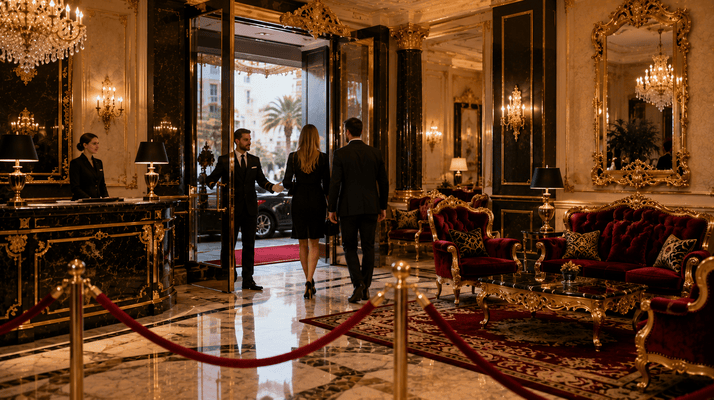
A premium guest experience begins the exact millisecond a traveler steps through the entrance. In high-end hospitality, the arrival zone is treated like an upscale theater stage. A successful vip hotel lobby design does not merely aim to process check-ins efficiently; its primary goal is to establish an immediate sense of prestige and security.

To achieve this, designers position grand, hand-carved baroque consoles and high-back upholstered chairs near the reception desks. The heavy structural weight and intricate craftsmanship of these classic items convey an understated message of stability, heritage, and permanence. This strategic staging instantly signals to arriving celebrities that they are entering a protected world of luxury where their every need will be meticulously met.

Creating Privacy in a Celebrity Hotel Reception Area

Managing the flow of a celebrity hotel reception during a major international festival is an architectural balancing act. Properties must provide open, grand spaces for press photography while simultaneously offering hidden, intimate zones where high-profile figures can converse away from prying eyes. This is where the structural silhouettes of baroque armchairs and structural sofas become indispensable.

By utilizing high-backed baroque furniture pieces, interior curators can build “invisible walls” within a sprawling lounge space. A pair of intricately carved throne chairs placed face-to-face creates an enclosed pocket of privacy. This intelligent layout allows VIPs to conduct impromptu interviews or private negotiations in the middle of a bustling room without feeling completely exposed to the surrounding crowd.

Case Studies in Riviera Opulence: Mastering the Royal Suite

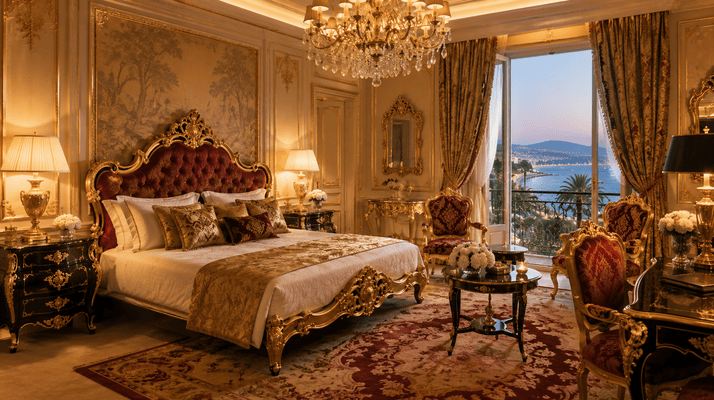
When we analyze the presidential and royal suites of the Croisette, specific furniture patterns emerge. These elite spaces utilize baroque furniture for hotels to contrast beautifully against the sweeping, minimalist views of the Mediterranean Sea. The juxtaposition of ornate gold-leaf frames against the crisp blue horizon is a hallmark of authentic Riviera style.

  • The Entryway Statement: Elite suites frequently feature a massive, gilded baroque mirror positioned directly opposite the main doorway to amplify the incoming coastal light and double the perceived square footage.
  • The Conversation Hub: The main sitting area often revolves around a velvet-upholstered baroque sofa featuring deep-tufted details, ensuring optimal physical comfort during extended late-night festival after-parties.
  • The Vanity Sanctuary: In dressing quarters, designers integrate delicate, rococo-inspired dressing tables to provide a glamorous, well-lit environment for actors preparing for their next big screening.

Why Craftsmanship Resonates with Elite Hotel Guests

The modern luxury traveler is highly sophisticated; they can instantly distinguish between mass-produced items and true artisanal manufacturing. Incorporating genuine, premium baroque furniture for hotels is a visual guarantee of quality. The deep reliefs, hand-carved acanthus leaves, and authentic metallic foil gilding speak a universal language of wealth.

This focus on uncompromised artistry is precisely what high-profile patrons expect. When an environment feels hand-tailored, the guest instinctively feels that the service will be equally customized. By moving away from flat, industrial materials and embracing the tactile, sculptural nature of the baroque era, premium hotels create an emotional connection that keeps their elite clientele returning year after year.

Recreating the Cannes VIP Experience for Global Brands

The design formulas perfected on the French Riviera are highly adaptable for boutique hotels and luxury commercial spaces worldwide. You do not need to convert your entire property into a historical museum to capture this specific essence. The modern approach is all about strategic, high-impact implementation.

Pairing a single, highly detailed baroque accent piece with smooth marble flooring, understated wall moldings, and contemporary linear lighting creates a timeless, transitional aesthetic. This clever design tension ensures your space looks distinctly forward-thinking while anchoring it firmly in the celebrated traditions of classic European elegance.

Conclusion: The Lasting Impression of Regal Design

As global design trends shift, the magnetic pull of velvet, gold leaf, and hand-carved timber remains completely unshaken. The calculated use of baroque aesthetics within the world’s most exclusive hospitality venues proves that true grandeur never goes out of fashion.

By analyzing how cannes film festival hotels use baroque furniture for vip guests, hoteliers and interior architects can unlock the exact tools required to cultivate an atmosphere of absolute exclusivity. Ultimately, creating a true VIP experience is about crafting an environment that makes every visitor feel like the main character of a cinematic masterpiece.

Multifunctional Hotel Room Desks: The Smart Solution for Modern Guest Needs

The traditional hotel room layout is undergoing a significant architectural shift. As the boundaries between work, travel, and leisure continue to blur, the demand for versatile hotel room furniture has never been higher. Today’s guest—whether a digital nomad or a luxury traveler—expects their room to function as a private office, a dining room, and a dressing area all at once.

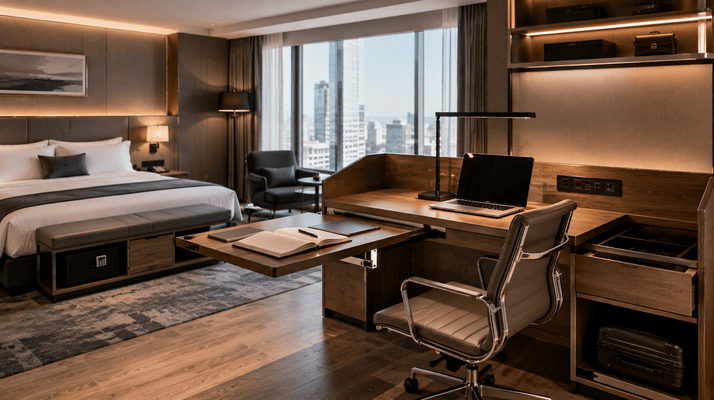
At the heart of this transformation is the hotel room desk. No longer just a static surface for a stationary lamp, the desk has become the Swiss Army knife of hospitality design. By integrating a multifunctional hotel desk, hoteliers can maximize square footage without sacrificing the high-end aesthetic that defines a luxury hotel desk.


The Evolution of the Workspace in Boutique and Lifestyle Hotels

Boutique and lifestyle hotels are leading the charge in space optimization. In these environments, every inch of the floor plan must be intentional. The rise of “bleisure” travel means guests are spending more time working from their rooms, but they don’t want to feel like they are in a corporate cubicle.

A multifunctional hotel desk solves this by offering a “chameleon” design. During the day, it provides a robust, ergonomic workspace with integrated power hubs. By evening, it can be cleared to serve as a sleek cocktail bar or a vanity. This flexibility allows the guest to customize their environment, which is a key driver of modern guest satisfaction scores.


Three Smart Models: Maximizing Hospitality Space

To truly understand the value of versatile hotel furniture, we must look at the specific models that are redefining the guest experience. These aren’t just tables; they are engineered solutions for compact luxury.

  1. The Desk-to-Vanity Hybrid: This model features a flip-top lid with an integrated mirror and soft LED lighting. When closed, it is a professional hotel room desk. When opened, it reveals a plush velvet-lined compartment for jewelry and cosmetics, turning the work zone into a beauty station.
  2. The Desk-Dining Duo: Ideal for urban hotels where space is at a premium, this desk features a pull-out leaf or an adjustable height mechanism. It allows the guest to transition from an afternoon of emails to an intimate room-service dinner without moving to a separate area.
  3. The Integrated Storage Desk: This luxury hotel desk incorporates hidden drawers, tech cabinets, and even a refrigerated minibar within its frame. By consolidating these functions into one piece of hotel furniture, the room remains clutter-free and visually expansive.

The Psychology of Clutter-Free Luxury

There is a direct correlation between a guest’s perceived value of a room and the lack of visual clutter. When a hotel room desk serves multiple purposes, it eliminates the need for three separate pieces of furniture. This “minimalist opulence” creates a sense of calm and order.

Architects use multifunctional hotel desk designs to maintain clear sightlines within a room. When a desk can hide cables, stow a chair completely underneath, or conceal a laptop, the room feels larger and more expensive. This is particularly vital in historic boutique buildings where room dimensions are often fixed and challenging.

Space Optimization: The Before and After Transformation

When a hotel switches from traditional hotel room furniture to multifunctional pieces, the transformation is often dramatic. In a standard 300-square-foot room, a traditional desk often creates a “dead zone” during non-working hours.

By installing a multifunctional hotel desk, that zone remains active 24/7. Hoteliers report that rooms feel “refreshed” and more modern simply by updating the desk to a model that accommodates the guest’s mobile lifestyle. This shift also allows for more creative floor plans, such as placing the desk at the foot of the bed or integrating it into a window-side lounge area.

Designing for the Connected Traveler

Technology integration is the final pillar of the luxury hotel desk. Today’s guest travels with an average of three electronic devices. A desk that forces a guest to crawl under a table to find a plug is a design failure.

Modern hotel room furniture incorporates wireless charging pads, USB-C ports, and HDMI connections directly into the surface. This ensures that the hotel room desk is the functional hub of the stay. When these technical features are hidden under high-quality veneers or leather inlays, the desk maintains its high-design status while providing 21st-century utility.

Practical Tips for Hoteliers and Designers

  • Prioritize Surface Durability: Desks that double as dining tables must have heat and stain-resistant finishes to withstand room service spills.
  • Invest in Lighting: A multifunctional desk needs layered lighting—focused task lights for work and warmer, ambient light for evening use.
  • Don’t Forget the Chair: A desk is only as good as its seating. Ensure the chair provided is comfortable for both working and dining.

Conclusion: Future-Proofing the Guest Room

The move toward multifunctional hotel room furniture is not a passing trend; it is a response to a fundamental change in how people use space. By investing in a multifunctional hotel desk, hoteliers are future-proofing their properties.

These smart solutions offer the perfect blend of form and function, providing guests with the versatility they need while maintaining the aesthetic integrity of the hotel’s brand. Ultimately, the best hotel room desk is one that anticipates the guest’s needs before they even have to ask, turning a standard stay into a seamless, high-performance experience.

Why Baroque Furniture Steals the Spotlight at Cannes Film Festival Hotels

The 79th Cannes Film Festival has wrapped another season of flashbulbs and evening gowns. But between the red carpet and the Palme d’Or ceremony, something else commands the lens: the interiors of Cannes’ legendary hotels. Walk into the lobby of Le Majestic or the Carlton during festival week, and you will see it immediately. Baroque furniture in Cannes hotels does not merely fill space. It performs.

Why does this ornate style, born in 17th‑century Europe, steal the show every May? Because baroque speaks the same visual language as cinema itself—drama, grandeur, and unforgettable detail. For hoteliers hosting the world’s biggest stars, baroque hotel furniture is the ultimate supporting actor.


The Arrival Moment: Why Baroque Creates Star‑Worthy Entrances

Picture an A‑list celebrity stepping into a Carlton suite. The doors open. First, they see a gilded console table with carved cherubs and a marble top. Behind it, a mirror framed in gold leaf doubles the room’s light. The bed is crowned with an arched, tufted headboard that echoes a theater curtain. That is not decoration. That is stagecraft.

I spoke with a senior designer who worked on Le Majestic’s recent renovation. “Stars arrive exhausted from flights and press lines,” she told me. “Baroque wraps them in immediate awe. The curves, the gold, the dark woods—it signals you have arrived somewhere important.” No minimalist Scandinavian shelf could ever deliver that punch. Luxury hotel furniture must announce itself. Baroque announces like a trumpet fanfare.

The proof is in the photographs. Scroll through any celebrity’s Cannes Instagram gallery. Behind their champagne glass or gown train, you will spot a marquetry cabinet or a crystal chandelier. Those images go viral. The furniture becomes part of the story.


Where Baroque Lives on the Croisette: Le Majestic & Carlton

Two addresses define Cannes luxury: Hôtel Barrière Le Majestic and the InterContinental Carlton. Both rely heavily on baroque hotel furniture to shape their identity.

At Le Majestic, the Dior suite combines 18th‑century inspired mouldings with contemporary upholstery. The result is old‑world bones with new‑world comfort. A carved walnut armoire stands opposite a plush velvet settee. Every surface invites touch. Every curve resists the flat‑pack aesthetic that dominates lesser hotels. This is hotel room furniture built to survive champagne spills, suitcase wheels, and the occasional late‑night script reading.

The Carlton, currently emerging from a massive restoration, has doubled down on baroque details. Think tufted headboards, ormolu mounts, and hand‑woven silk panels. Their general manager once told the press: “Our guests do not want generic. They want memory.” Baroque delivers memory in every gilded scroll.


Durability Meets Photogenic Drama

One objection to ornate furniture is practicality. Won’t carved details break? Doesn’t gold leaf scratch? Not when crafted properly. Luxury hotel furniture in baroque style uses solid hardwoods, hand‑applied finishes, and reinforced joinery. A hotel suite sees more foot traffic in one festival week than a home sees in five years. Baroque pieces survive because they were originally built for palaces—which also needed to last.

Moreover, baroque is relentlessly photogenic. The interplay of light on a carved volute or a mirrored surface creates natural depth. Social media managers for hotels know this. A flat white wall does not trend on TikTok. A baroque console with a single orchid and a celebrity’s Prada clutch? That earns millions of views.

For your own projects, whether a boutique hotel or a private residence, baroque furniture in Cannes hotels offers a proven blueprint. The style commands attention, tells a story, and refuses to be ignored. It is the opposite of disposable.


Bringing the Cannes Baroque Spirit Home

You may not host a film festival in your living room. But you can borrow the principle. A single baroque hotel furniture piece—a mirror, a sideboard, an armchair—transforms an ordinary room into an arrival space. Pair it with neutral walls and modern lighting to avoid heaviness. Let one carved treasure steal the spotlight.

The hotels of Cannes have understood this for a century. When the stars descend every May, they sleep inside museum‑worthy furniture. That is not coincidence. That is strategy. And it is why baroque never leaves the Croisette.


Final Frame


Next time you watch a red‑carpet interview from Cannes, look past the gown. Scan the background. You will almost certainly spot carved wood, gilded edges, and tufted velvet. That is baroque hotel furniture holding its own against Hollywood’s brightest lights. Some trends fade. Baroque endures. Because drama never goes out of style.

Luxury Hotel Seating Guide: Choosing Durable & Comfortable Lobby Furniture

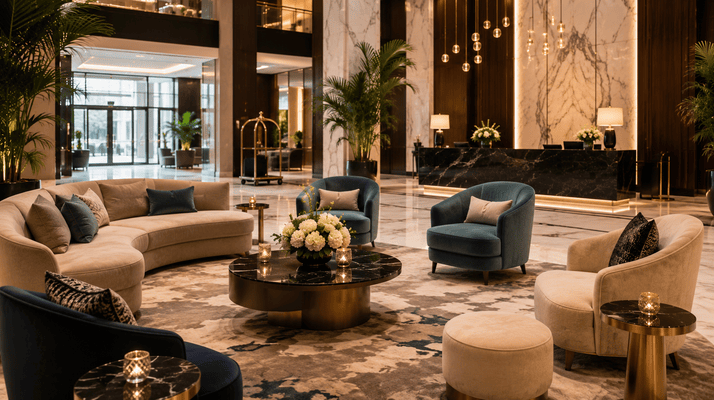
The lobby is the heartbeat of any upscale hospitality establishment. It is the first physical touchpoint for a guest and the final space they inhabit before departure. Consequently, selecting the right hotel lobby furniture is a high-stakes decision that bridges the gap between aesthetic branding and operational efficiency.

In a luxury setting, “good enough” is never enough. Every piece of hotel lobby seating must perform a dual role: it must be a sculptural masterpiece that defines the room’s character, and a rugged workhorse capable of withstanding hundreds of occupants daily. This guide provides an architect’s perspective on balancing these competing demands to create a world-class arrival experience.


The Durability Test: Beyond the Surface Aesthetics

When sourcing hotel lobby chairs, the internal construction is just as vital as the upholstery. Residential furniture often fails in a hotel environment within months because it isn’t “contract grade.” Luxury hospitality furniture is engineered with reinforced joinery and high-density foams that retain their shape after thousands of compression cycles.

To ensure long-term value, look for frames constructed from kiln-dried hardwoods or integrated steel. A durability test for a luxury chair isn’t just about weight capacity; it is about “deflection.” If a chair frame flexes significantly when a guest sits, the joints will eventually loosen and squeak, instantly devaluing the guest’s perception of the hotel’s quality.


Selecting Fabrics That Marry Luxury with Longevity

The choice of textile for reception waiting area furniture is where many designers face their toughest challenge. In a high-traffic lobby, fabrics are subjected to luggage scrapes, coffee spills, and constant friction. For 2026, the industry has moved toward “high-performance naturals”—fabrics that look like linen or mohair but are infused with molecular-level stain resistance.

  • Performance Velvets: These offer the deep sheen required for luxury while maintaining a Martindale rub count of over 100,000, ensuring the fabric won’t go bald over time.
  • Treated Full-Grain Leathers: Leather develops a beautiful patina, but in a lobby, it must be treated to resist the oils and acids from skin contact and cleaning agents.
  • Crypton-Type Technology: These integrated barriers prevent liquids from reaching the foam, which is essential for maintaining hygiene and preventing odors in hotel lobby seating.

Mastering the Layout for Flow and Privacy

The arrangement of your hotel lobby furniture dictates how guests interact with your space. A successful lobby design creates “zones” that cater to different guest needs simultaneously. Some guests seek a communal, social atmosphere, while others require a secluded pod for a private phone call or a quick email.

Strategic placement of hotel lobby chairs can create these invisible boundaries. For instance, high-back wing chairs facing away from the main thoroughfare signal privacy. Conversely, large, modular sectional sofas placed in the center of the room encourage group gathering. Always ensure that the “clear floor space” between furniture pieces is generous enough for bell carts and luggage to pass through without disturbing seated guests.


The Ergonomics of First Impressions

Comfort in a hotel lobby is different from comfort in a living room. Reception waiting area furniture should offer “active comfort.” Because guests are often dressed in business attire or traveling clothes, the seat height should be slightly higher than a standard lounge chair to allow for an easy “egress” (standing up).

Furthermore, the pitch of the backrest should support an upright posture. If a guest sinks too deeply into a chair, it becomes difficult to manage a laptop or handle travel documents. The ideal hotel lobby furniture provides a firm initial sit with a soft top layer, giving the illusion of plushness while maintaining the structural support needed for a professional environment.


Quiz: What Seating Style Fits Your Hotel Concept?

To help narrow down your selection, identify which of these three core luxury concepts matches your property’s identity:

  1. The Avant-Garde Boutique: Do you value bold shapes and “Instagrammable” moments? Focus on sculptural hotel lobby chairs with unconventional silhouettes and vibrant colors.
  2. The Heritage Grand: Is your hotel steeped in history? Look for traditional hotel lobby seating featuring tufted leather, dark wood accents, and classic silhouettes.
  3. The Modern Zen: Is your brand about wellness and calm? Choose low-profile, modular reception waiting area furniture in neutral tones and organic materials like light oak and wool.

Conclusion: Investing in the Guest Experience

Choosing hotel lobby furniture is an investment in your brand’s reputation. A guest may forget the color of the carpet, but they will always remember the feeling of sinking into a perfectly supportive chair after a long flight.

By prioritizing contract-grade durability, high-performance textiles, and ergonomic layouts, you ensure that your lobby remains a stunning, functional gateway for years to come. Luxury is found in the details of the “sit”—make sure your furniture speaks the language of quality from the very first moment.