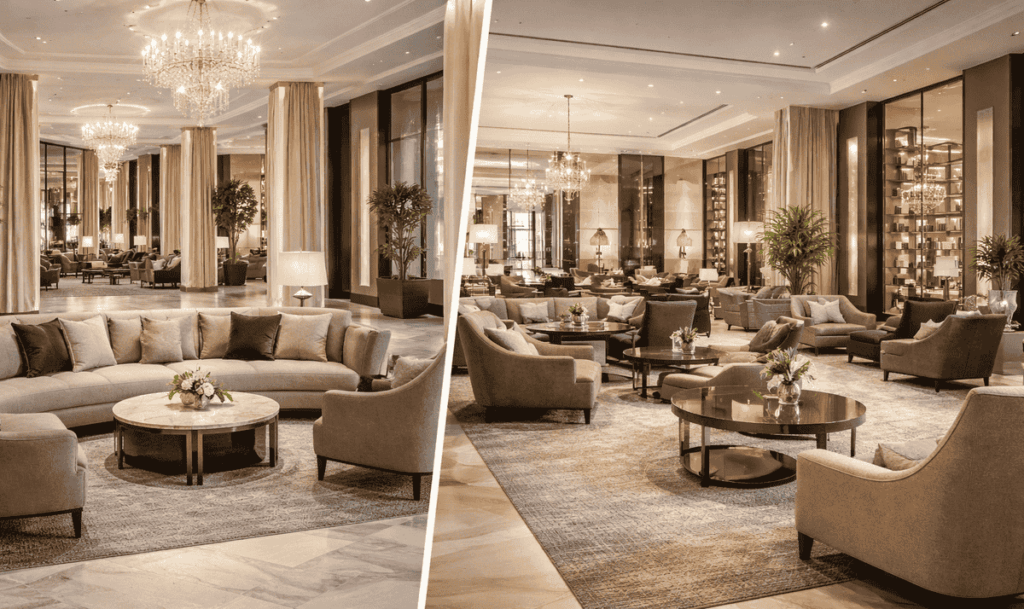
The hotel lobby is no longer a space guests simply pass through. It has evolved into a social hub, waiting lounge, meeting point, and first emotional connection with the brand. For hotel owners across Europe, choosing between a hotel lobby sofa and loose lounge seating is a strategic decision that directly affects guest flow, comfort, and perceived luxury.
Both options sit at the core of modern hotel lobby furniture planning, yet they serve different purposes. Understanding how each performs within a luxury hospitality environment helps owners make informed, brand-aligned choices.
The Role of Seating in Luxury Lobby Design
Seating defines how guests interact with a lobby. It controls movement, dwell time, and even social behaviour. Well-planned luxury hotel furniture encourages guests to relax, wait comfortably, or engage in conversation without feeling crowded or disconnected.
From a design perspective, seating must balance aesthetics with function. A visually impressive lobby that lacks comfortable seating quickly loses its appeal, while an overfurnished space can feel cluttered and restrictive.
Hotel Lobby Sofa: Structure, Comfort, and Visual Impact
A hotel lobby sofa creates a strong sense of structure within the space. Sofas naturally anchor seating zones, making large lobbies feel organised and intentional. In luxury hotels, sofas often become the visual centrepiece of the lobby.
Key advantages of a hotel lobby sofa include:
- Clear definition of seating areas
- Consistent comfort across multiple guests
- Strong visual presence that enhances perceived luxury
From a guest perspective, a well-designed hotel lobby sofa communicates stability and refinement. It encourages longer stays, casual meetings, and relaxed waiting—particularly important for premium and boutique hotels where atmosphere matters.
Lounge Seating: Flexibility and Spatial Freedom
Loose lounge seating typically includes individual armchairs, accent chairs, and side tables. This approach offers flexibility, especially in lobbies that serve multiple functions throughout the day.
Benefits of lounge seating include:
- Easier reconfiguration for events or seasonal changes
- Greater sense of openness in smaller lobbies
- More personal seating experiences for individual guests
When integrated thoughtfully, lounge seating complements hotel lobby furniture layouts that prioritise movement and adaptability. However, without careful planning, it can lack cohesion and feel visually fragmented in larger luxury spaces.
Space Planning: Sofa Zones vs Scattered Seating
Space planning is where the real comparison begins. A hotel lobby sofa works best in medium to large lobbies where defined zones enhance flow. Sofas naturally guide guests, reducing confusion and creating intuitive circulation paths.
Loose lounge seating suits:
- Compact boutique hotel lobbies
- Multi-purpose spaces requiring flexibility
- Informal, lifestyle-oriented hotel concepts
For luxury hotels, a hybrid approach is often the most effective—using a central hotel lobby sofa as an anchor, supported by complementary lounge chairs to soften transitions.
Guest Flow and Movement Efficiency
Guest flow is a critical operational factor. Poor seating placement can obstruct pathways, cause congestion, or create awkward circulation. A strategically positioned hotel lobby sofa helps channel movement while offering clear resting points.
Lounge seating, when scattered without intention, may disrupt flow. In contrast, structured luxury hotel furniture layouts improve navigation and maintain visual calm—an essential quality in high-end hospitality environments.
Perceived Luxury: Visual Weight vs Personal Comfort
Perceived luxury is shaped by scale, proportion, and material quality. A large, well-crafted hotel lobby sofa instantly signals investment and permanence. It reflects confidence and brand maturity, particularly in premium hotels.
Lounge seating, while comfortable, relies heavily on design consistency to achieve the same effect. Mismatched or lightweight pieces can dilute the luxury message if not curated carefully.
For European luxury hotels, guests often associate sofas with grandeur and reliability, while lounge chairs feel more casual and residential.
Boutique Hotels: Choosing the Right Balance
Boutique hotels face a unique challenge. Their lobbies are often smaller, yet expectations remain high. In these spaces, a compact hotel lobby sofa can provide structure without overwhelming the room.
Pairing a sofa with select lounge seating allows boutique hotels to:
- Maintain intimacy
- Offer varied seating experiences
- Preserve visual harmony
This balance ensures hotel lobby furniture supports both brand storytelling and guest comfort.
Long-Term Value and Maintenance Considerations
From an ownership perspective, durability and maintenance matter. A high-quality hotel lobby sofa typically offers better long-term value due to uniform wear and easier upholstery management.
Loose lounge seating may require more frequent replacement due to uneven usage. Investing in durable luxury hotel furniture ensures visual consistency and reduces operational costs over time.
Conclusion: Which Seating Works Best?
There is no universal answer—but there is a strategic one. A hotel lobby sofa excels at creating structure, comfort, and a strong luxury impression. Lounge seating offers flexibility and intimacy when used intentionally.
For luxury, boutique, and premium hotels across Europe, the most effective solution often combines both. Anchoring the lobby with a statement hotel lobby sofa, supported by carefully selected lounge seating, delivers balance, efficiency, and refined elegance.
When hotel lobby furniture aligns with space planning and brand identity, the lobby becomes more than an entrance—it becomes an experience.