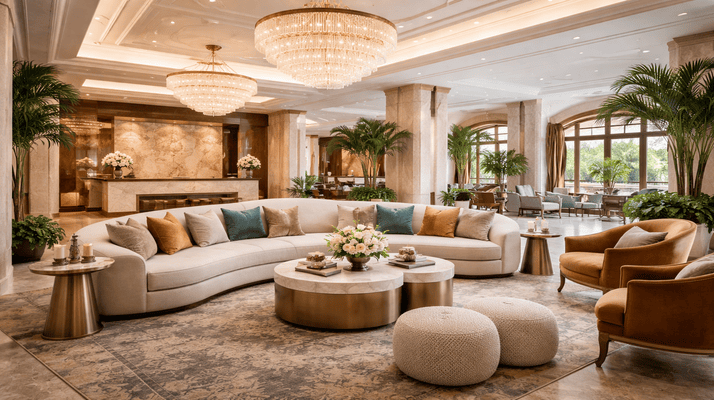
First impressions are everything in hospitality.
Before a guest checks in, before they taste the food or experience the service — they sit down. That first moment of contact with your hotel lobby seating shapes their entire perception of your property.
Choosing the wrong sofa is a costly mistake. Choosing the right one is a long-term investment in guest satisfaction, brand identity, and operational efficiency.
This guide breaks down exactly what experienced hospitality designers evaluate before selecting hotel lobby sofas — so you can buy with confidence.
1. Durability Ratings: Built for High-Traffic Environments
A residential sofa is designed for occasional use. A commercial-grade hotel lobby sofa is engineered for thousands of sits per year.
The key metric to know is the rub count — a measure of fabric durability tested using the Wyzenbeek or Martindale method.
- Residential use: 15,000 – 25,000 rubs
- Commercial/light hospitality use: 30,000 – 50,000 rubs
- Heavy-duty hotel lobby use: 100,000+ rubs
Always confirm the durability rating before purchasing. A sofa that looks stunning but carries a low rub count will show wear within months in a busy lobby.
Designer tip: Hospitality professionals never compromise on durability ratings regardless of how attractive the design is. Aesthetics fade — structural integrity doesn’t.
2. Frame Construction: The Backbone of Every Great Sofa
The frame determines how long your hotel lobby furniture lasts.
Designers consistently prioritize these frame materials:
Kiln-Dried Hardwood — The gold standard. Resistant to warping, cracking, and moisture. Ideal for lobbies in humid climates.
Steel or Reinforced Metal Frames — Excellent for modern, minimalist designs. Extremely strong and resistant to structural fatigue under heavy use.
Engineered Wood (Avoid) — Common in budget options. Prone to weakening over time, especially in high-traffic commercial settings.
Additionally, look for corner-blocked joints and double-dowelled connections — these structural reinforcements significantly extend the lifespan of any commercial sofa.
3. Fabric Grades Explained: Choosing the Right Upholstery
Fabric selection is where most buyers make their biggest mistakes.
Hotel lobby furniture demands upholstery that can withstand spills, cleaning chemicals, sunlight, and daily friction — without losing its visual appeal.
Here’s how fabric grades typically break down:
| Grade | Best For | Key Characteristics |
| Grade A | Budget-conscious lobbies | Basic durability, limited patterns |
| Grade B | Mid-tier hotel properties | Improved rub count, wider color range |
| Grade C | Upscale hotel lobbies | Premium texture, high durability |
| Grade D/E | Luxury hotel furniture | Designer fabrics, COM options available |
Top fabric choices used in hospitality design:
- Performance Velvet — Luxurious appearance with stain-resistant treatment
- Contract-Grade Linen Blend — Breathable, elegant, and professionally cleanable
- Faux Leather / Vegan Leather — Easy to wipe clean, ideal for high-spill zones
- Bouclé — Trending in upscale lobbies for its textured, warm aesthetic
Always ask for a COM (Customer’s Own Material) option if you want full control over your lobby’s design language.
4. Weight Capacity and Scale: Getting the Proportions Right
Oversized sofas can overwhelm a compact lobby. Undersized pieces look out of place in grand reception halls.
Designers evaluate weight capacity and dimensional scale simultaneously.
For commercial hotel lobby seating, the standard weight capacity benchmark is 300–400 lbs per seat. Modular and sectional configurations often distribute weight more effectively.
Proportion guidelines hospitality designers follow:
- Sofa seat height: 17–19 inches (comfortable for most guests)
- Seat depth: 20–24 inches (supportive without being too casual)
- Allow 30–36 inches of circulation space around each seating cluster
Getting scale right ensures the lobby feels welcoming — not crowded, not sparse.
5. Ease of Maintenance: The Overlooked Priority
Even the most stunning luxury hotel furniture needs regular cleaning.
Designers factor in maintenance before finalizing any sofa specification:
- Removable cushion covers allow for deep cleaning without moving the entire sofa
- Antimicrobial fabric treatments are standard in post-pandemic hospitality design
- Contrast piping and dark bases hide everyday scuffing more effectively than light solid finishes
- Modular designs allow individual sections to be replaced rather than discarding the entire piece
A sofa that’s difficult to maintain will cost significantly more in the long run.
Quick Comparison: What to Prioritize by Hotel Type
| Hotel Type | Frame Priority | Fabric Grade | Rub Count |
| Budget/Economy Hotel | Engineered wood acceptable | Grade A–B | 30,000+ |
| Mid-Scale Property | Hardwood preferred | Grade B–C | 50,000+ |
| Upscale Hotel | Kiln-dried hardwood | Grade C–D | 100,000+ |
| Luxury/Boutique Hotel | Hardwood or steel | Grade D–E / COM | 100,000+ |
Make Your Hotel Lobby Seating Work Harder
The right hotel lobby sofa is never just a place to sit — it’s a statement about your brand, a commitment to guest comfort, and a smart long-term investment.
By evaluating durability ratings, frame construction, fabric grades, weight capacity, and maintenance requirements, you make purchasing decisions that serve your property for years — not just seasons.
Explore our full collection of commercial-grade hotel lobby furniture designed to meet the demands of modern hospitality — built beautifully, built to last.