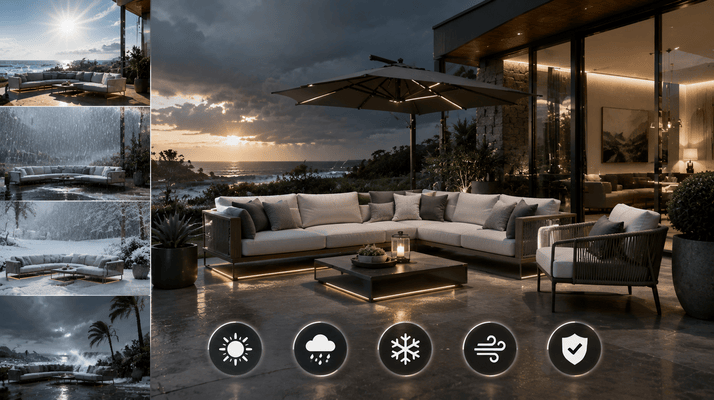
The definition of luxury living has fundamentally shifted. For years, designing an elite terrace or resort poolside was strictly about aesthetics—bringing the plush, sophisticated comfort of the indoor living room out into the open air. However, as global weather patterns present more frequent heat waves, unpredictable torrential downpours, and intense UV exposure, visual appeal is no longer enough.
In 2026, true luxury is defined by resilience. Today’s high-end consumers and elite commercial properties demand pieces that preserve their flawless look while braving environmental extremes. To understand how the industry is meeting this demand, we interviewed leading hospitality designers to uncover how the latest innovations in weatherproof outdoor furniture are redefining open-air spaces.
The New Engineering of All-Weather Elegance
“We are no longer just designing furniture; we are engineering micro-architectures that interact with changing microclimates,” explains architectural designer Elena Rossi. Rossi notes that high-end clients refuse to compromise on tactile comfort, yet they expect their investments to survive brutal summers and heavy monsoons.
The solution lies in advanced material science. High-gloss finishes and delicate natural wickers have been replaced by ultra-durable alternatives.
Sourcing Materials Built for Extremes
- Marine-Grade Metals: Powder-coated, marine-grade aluminum and sandblasted stainless steel form the structural foundation for premium collections. These metals completely resist corrosion, ensuring that luxury hotel patio furniture handles coastal salt air or high humidity without structural degradation.
- High-Density Polymers & Performance Weaves: Natural rattan has evolved into high-density polyethylene (HDPE) synthetic fibers and UV-stabilized olefin cords. These materials are hand-woven to mirror the warmth of organic fibers while remaining completely impervious to fading, splitting, or water absorption.
- Thermally Modified Hardwoods: While grade-A Indonesian teak remains an industry golden standard due to its natural, self-protecting oils, thermally modified ash has emerged as a sustainable powerhouse. The thermal treatment alters the wood’s cellular structure, rendering it non-porous and highly resistant to warping under extreme heat.
Hospitality Standards Coming to Residential Spaces
The boundary between commercial resorts and private residences has officially dissolved. Homeowners are increasingly looking to premium hotel outdoor furniture specifications to guarantee longevity for their private oases.
Commercial spaces require furniture that handles high traffic and constant exposure to intense sun, pool chemicals, and heavy rain. Luxury residential buyers are adopting these exact procurement habits—investing in heavy, wind-resistant silhouettes and fast-drying foam technologies that allow cushions to dry completely within minutes of a heavy downpour.
| Material Group | Weather Defense | 2026 Design Aesthetic |
| Powder-Coated Aluminum | Zero rust, high wind stability | Matte charcoal, sage, and sand-beige frames |
| UV-Stabilized HDPE Rope | Won’t fade or crack in 40°C+ heat | Thick, architectural basket-weave patterns |
| Solution-Dyed Acrylics | Hydrophobic, mold-resistant | Textured bouclés and stone-washed linen finishes |
Designing With a Low-Profile, High-Impact Aesthetic
The visual trend for 2026 focuses on low-slung, modular systems that blend naturally into the surrounding landscape. Instead of rigid structures, designers are favoring soft, flowing lines and deep-seating configurations.
Color palettes have shifted away from stark, clinical whites toward warm, earth-rooted tones like olive green, terracottas, and sun-softened neutrals. These muted shades are intentional; they naturally reflect harsh sunlight to reduce heat retention, ensuring that surfaces remain comfortable to the touch even during peak afternoon hours.
Furthermore, these systems offer immense flexibility. Modular luxury setups allow properties to easily reconfigure layouts based on shifting seasonal winds or specific event needs, combining structural lightness with heavy-duty environmental defense.
Protecting Your Open-Air Investment
Even the most resilient, premium-grade materials benefit from strategic care. To maintain the showroom look of your luxury setup through the off-season, brief maintenance checks are key.
- Post-Season Wash: Wipe down metal and woven frames with a mild, non-abrasive soap once a quarter to remove salt and pollution residues.
- Cushion Care: While high-performance fabrics naturally repel water, storing cushions in a ventilated deck box during extended periods of severe storms prevents long-term debris buildup.
- Annual Touch-ups: For wooden components like teak, applying a light coat of protective sealer once a year helps retain its signature warm honey hue, though letting it naturally weather to a classic silver-gray is an equally stunning luxury choice.
What’s the biggest weather challenge for your outdoor area?
Whether you are managing an expansive resort terrace or curating a private backyard oasis, choosing the right material combination can save you from replacing damaged sets year after year. Investing in high-performance, climate-resilient pieces guarantees that your open-air sanctuary remains beautiful, functional, and deeply inviting, no matter what the horizon brings.