The French Riviera transforms into the undisputed center of the global entertainment industry every spring. As Hollywood royalty, international directors, and high-net-worth patrons step off the red carpet, they seek refuge within the city’s legendary five-star properties. Behind the velvet rope of these elite establishments, a highly calculated aesthetic strategy is deployed to make these discerning patrons feel instantly prioritized.
The secret to this rarefied atmosphere lies in a masterful deployment of historical grandeur. While contemporary minimalism has dominated mainstream residential design, the upper echelons of the hospitality world rely heavily on the drama of ornate silhouettes. Understanding how cannes film festival hotels use baroque furniture for vip guests reveals a timeless blueprint for transforming standard commercial spaces into elite, unforgettable sanctuaries.
The Psychology of First Impressions in VIP Hotel Lobby Design
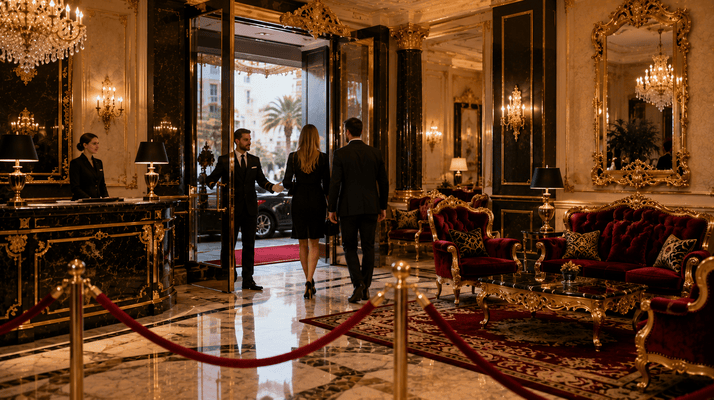
A premium guest experience begins the exact millisecond a traveler steps through the entrance. In high-end hospitality, the arrival zone is treated like an upscale theater stage. A successful vip hotel lobby design does not merely aim to process check-ins efficiently; its primary goal is to establish an immediate sense of prestige and security.
To achieve this, designers position grand, hand-carved baroque consoles and high-back upholstered chairs near the reception desks. The heavy structural weight and intricate craftsmanship of these classic items convey an understated message of stability, heritage, and permanence. This strategic staging instantly signals to arriving celebrities that they are entering a protected world of luxury where their every need will be meticulously met.
Creating Privacy in a Celebrity Hotel Reception Area
Managing the flow of a celebrity hotel reception during a major international festival is an architectural balancing act. Properties must provide open, grand spaces for press photography while simultaneously offering hidden, intimate zones where high-profile figures can converse away from prying eyes. This is where the structural silhouettes of baroque armchairs and structural sofas become indispensable.
By utilizing high-backed baroque furniture pieces, interior curators can build “invisible walls” within a sprawling lounge space. A pair of intricately carved throne chairs placed face-to-face creates an enclosed pocket of privacy. This intelligent layout allows VIPs to conduct impromptu interviews or private negotiations in the middle of a bustling room without feeling completely exposed to the surrounding crowd.
Case Studies in Riviera Opulence: Mastering the Royal Suite
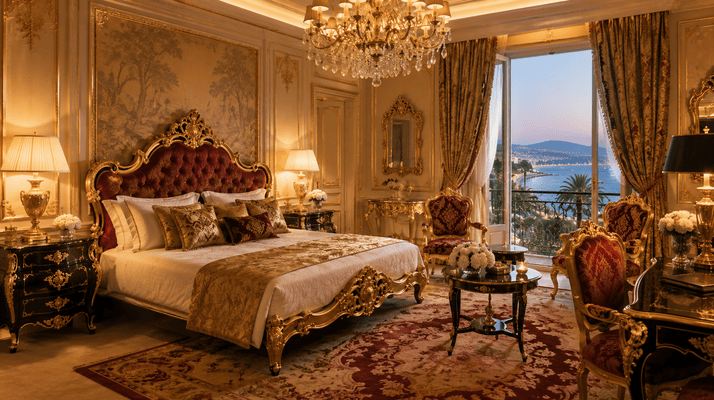
When we analyze the presidential and royal suites of the Croisette, specific furniture patterns emerge. These elite spaces utilize baroque furniture for hotels to contrast beautifully against the sweeping, minimalist views of the Mediterranean Sea. The juxtaposition of ornate gold-leaf frames against the crisp blue horizon is a hallmark of authentic Riviera style.
- The Entryway Statement: Elite suites frequently feature a massive, gilded baroque mirror positioned directly opposite the main doorway to amplify the incoming coastal light and double the perceived square footage.
- The Conversation Hub: The main sitting area often revolves around a velvet-upholstered baroque sofa featuring deep-tufted details, ensuring optimal physical comfort during extended late-night festival after-parties.
- The Vanity Sanctuary: In dressing quarters, designers integrate delicate, rococo-inspired dressing tables to provide a glamorous, well-lit environment for actors preparing for their next big screening.
Why Craftsmanship Resonates with Elite Hotel Guests
The modern luxury traveler is highly sophisticated; they can instantly distinguish between mass-produced items and true artisanal manufacturing. Incorporating genuine, premium baroque furniture for hotels is a visual guarantee of quality. The deep reliefs, hand-carved acanthus leaves, and authentic metallic foil gilding speak a universal language of wealth.
This focus on uncompromised artistry is precisely what high-profile patrons expect. When an environment feels hand-tailored, the guest instinctively feels that the service will be equally customized. By moving away from flat, industrial materials and embracing the tactile, sculptural nature of the baroque era, premium hotels create an emotional connection that keeps their elite clientele returning year after year.
Recreating the Cannes VIP Experience for Global Brands
The design formulas perfected on the French Riviera are highly adaptable for boutique hotels and luxury commercial spaces worldwide. You do not need to convert your entire property into a historical museum to capture this specific essence. The modern approach is all about strategic, high-impact implementation.
Pairing a single, highly detailed baroque accent piece with smooth marble flooring, understated wall moldings, and contemporary linear lighting creates a timeless, transitional aesthetic. This clever design tension ensures your space looks distinctly forward-thinking while anchoring it firmly in the celebrated traditions of classic European elegance.
Conclusion: The Lasting Impression of Regal Design
As global design trends shift, the magnetic pull of velvet, gold leaf, and hand-carved timber remains completely unshaken. The calculated use of baroque aesthetics within the world’s most exclusive hospitality venues proves that true grandeur never goes out of fashion.
By analyzing how cannes film festival hotels use baroque furniture for vip guests, hoteliers and interior architects can unlock the exact tools required to cultivate an atmosphere of absolute exclusivity. Ultimately, creating a true VIP experience is about crafting an environment that makes every visitor feel like the main character of a cinematic masterpiece.