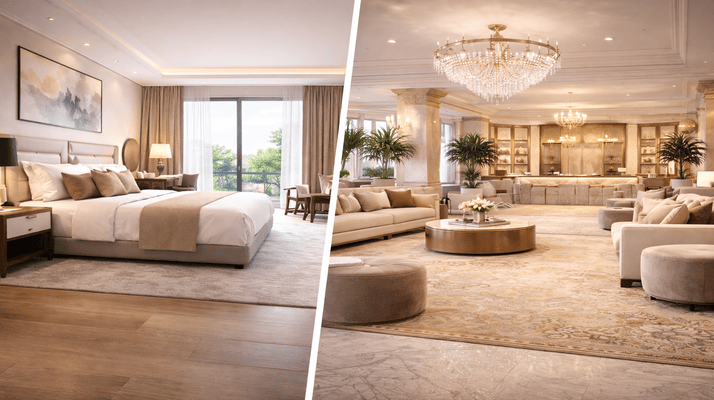
Budget allocation is one of the most strategic decisions a hotel owner must make. When renovating or developing a property, the question often arises: should more investment go into Hotel Room Furniture or into hotel lobby furniture? Both spaces influence perception, yet they serve very different purposes within luxury hospitality.
Understanding how guests interact with rooms versus lobbies is essential for making a financially sound and brand-aligned decision. For luxury, boutique, and premium hotels across Europe, furniture investment must balance comfort, visibility, and long-term return.
Guest Time Spent: Private Comfort vs Public Impression
Guests spend significantly more time inside their rooms than in the lobby. Sleep quality, storage convenience, seating comfort, and workspace functionality all depend on well-designed Hotel Room Furniture. If the room fails to meet expectations, even the most impressive entrance experience cannot compensate.
On the other hand, hotel lobby furniture shapes the first impression. It is highly visible, photographed frequently, and often associated with brand identity. A striking lobby may attract attention online, but the room determines whether guests leave satisfied.
For hotel owners, this difference between duration and visibility is crucial. Rooms influence comfort and reviews; lobbies influence perception and marketing impact.
ROI Perspective: Where Does the Money Work Harder?
From a financial standpoint, Hotel Room Furniture directly affects guest satisfaction scores and repeat bookings. Comfortable beds, durable wardrobes, and functional desks enhance everyday experience. Positive room comfort often appears in reviews, strengthening occupancy rates.
Investing in high-quality luxury hospitality furniture for guest rooms also reduces maintenance costs. Durable materials withstand daily use, lowering replacement frequency and protecting long-term profitability.
Conversely, hotel lobby furniture delivers marketing value. A visually impressive lobby increases social media exposure and enhances perceived luxury. However, if rooms lack quality, overall ratings may decline despite lobby appeal.
In most luxury hospitality environments, rooms provide stronger measurable ROI due to direct guest interaction.
Brand Impact: Visibility vs Intimacy
The lobby acts as a brand showcase. Carefully curated hotel lobby furniture communicates sophistication and sets the tone for the property. It is where guests form initial emotional impressions.
Yet true brand loyalty develops in private spaces. Premium Hotel Room Furniture defines how guests sleep, relax, and work. Intimate comfort builds trust and emotional connection.
Luxury hotel brands that prioritise room comfort often achieve higher guest retention because the private experience exceeds expectations. While the lobby attracts, the room convinces.
Boutique Hotels: A Different Balance
Boutique hotels operate differently from large-scale luxury properties. Their lobbies are often smaller, sometimes integrated with lounges or dining areas. In such cases, hotel lobby furniture plays a stronger role in shaping atmosphere and storytelling.
However, boutique guests still evaluate comfort carefully. High-quality Hotel Room Furniture remains essential, particularly in compact urban properties where space efficiency matters.
For boutique hotels, a balanced approach works best—investing strategically in both visible lobby elements and durable room essentials.
Durability and Operational Efficiency
Furniture in guest rooms experiences consistent daily usage. Beds, side tables, wardrobes, and desks endure repetitive wear. Investing in robust Hotel Room Furniture reduces operational disruptions and long-term repair expenses.
Lobby pieces, while visible, may experience uneven usage. Certain seating areas attract higher traffic, requiring durable luxury hospitality furniture solutions to maintain presentation standards.
From an operational perspective, rooms demand higher durability standards due to continuous use patterns.
Guest Reviews and Online Perception
Online reviews frequently mention comfort, sleep quality, and room functionality. These factors depend almost entirely on Hotel Room Furniture quality. A well-designed room can generate strong loyalty and positive feedback even if the lobby design is understated.
However, high-end hotel lobby furniture contributes to visual storytelling. Many guests photograph lobby spaces, influencing digital presence. Luxury properties in Europe often benefit from lobby aesthetics that align with architectural style.
The ideal strategy recognises that lobby investment supports visibility, while room investment supports satisfaction.
Strategic Allocation: What Should Come First?
For new developments or major renovations, prioritising Hotel Room Furniture typically yields stronger long-term returns. Ensuring every guest experiences superior comfort builds sustainable reputation.
Once room standards are secured, allocating funds to elevate hotel lobby furniture enhances brand prestige and public perception.
Premium luxury hospitality furniture solutions should never be chosen purely for aesthetics. Performance, comfort, and longevity must guide decision-making.
Conclusion: Comfort Builds Loyalty, Visibility Builds Attraction
Both spaces matter. Lobby investment enhances visual appeal and brand introduction, while Hotel Room Furniture defines comfort and retention. For hotel owners seeking measurable ROI, room furniture generally offers greater long-term financial value.
That said, successful luxury hotels across Europe balance the two. Prioritise durable, high-quality luxury hospitality furniture in guest rooms first, then elevate the lobby to strengthen brand presence.
In hospitality, impressions attract guests—but comfort keeps them coming back.